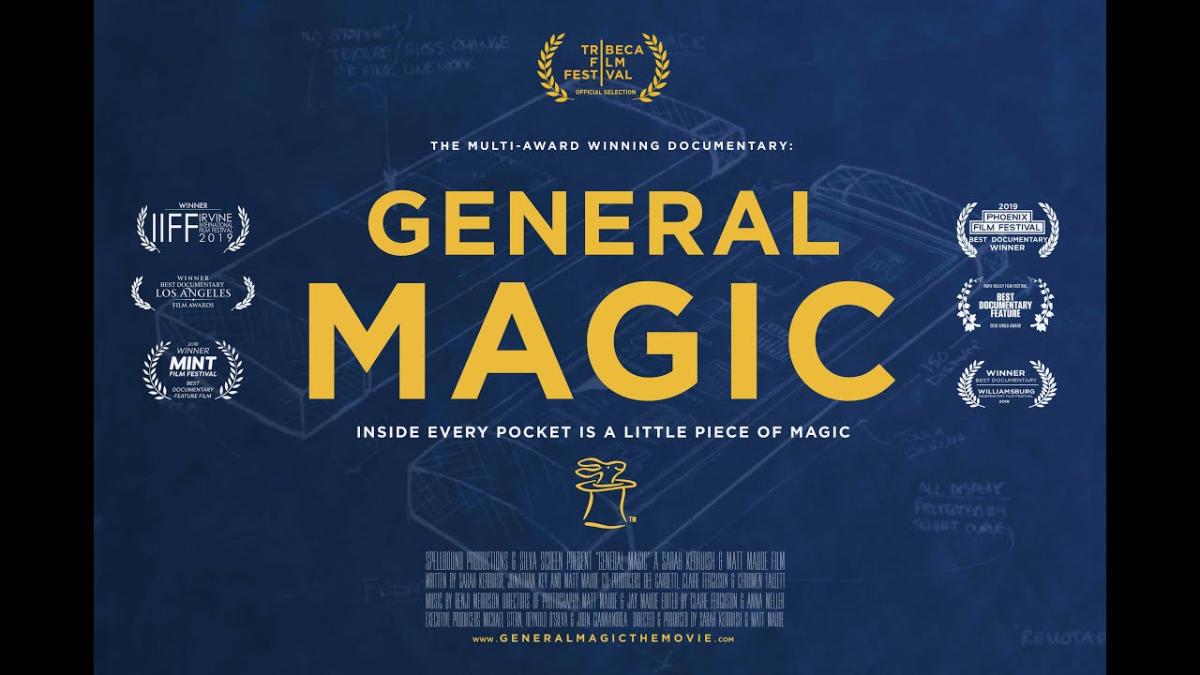

General Magic shows who worked on this technology. Many team members of General Magic later played a key role at companies like Apple, Google, and Android. The documentary illustrates how visionary ideas emerge, why they sometimes fail, and how those failures still lay the groundwork for later breakthroughs.
Visionary invention
General Magic developed software, interfaces, and communication models for which there simply was no existing infrastructure. Networks were too slow, hardware too limited, and the market did not understand the product. Nevertheless, the team held on to its vision.
For anyone working on new technology, this is recognizable: innovation often means building without proven frameworks, while you have to explain why something is needed that no one is missing yet. The film shows how risky that is and how thin the line can be between visionary and naïve.
An important insight from General Magic is that technical excellence is no guarantee of success. Timing, market readiness, and organizational choices play at least as significant a role. The documentary shows how internal tensions, external pressure, and overly high expectations contribute to the downfall of the company, despite brilliant technology.
For professionals working on platforms, software, or new products, this is a valuable lesson. Not every failure is the result of bad technology; sometimes it is due to an ecosystem that does not yet exist.
The human side of innovation
What sets General Magic apart from many tech documentaries is the focus on the people behind the code. You see doubt, pride, frustration, and perseverance. Innovation is not presented here as a heroic success story, but as a long process full of wrong assumptions and emotional investments.
This makes the film relevant for anyone involved in digital innovation: it reminds us that technology is always built by people, with all the limitations that entails.
General Magic lingers
General Magic is not a nostalgic tech story nor a warning against innovation. It is a nuanced look at how progress works: rarely linear, often messy, and almost always dependent on timing.
For those working with new technology, IT strategy, or product development, it is a documentary that helps put things into perspective and think more critically about when something is technically possible but strategically not yet.