
CES remains the playground for future tech – but 2026 feels "more practical"
CES is traditionally the place where prototypes steal the show, but this year it was striking how often manufacturers framed their demos as a step towards "now truly deployable". Not because all technology suddenly matured, but because the combinations make more sense: powerful on-device AI, more affordable sensors, and mechatronics that no longer belong exclusively in industrial environments.
What do we mean by embodied AI?
Embodied AI is, simply put, AI that not only understands or advises, but also acts in the physical world: cameras and depth sensors to see, force and tactile feedback to feel, actuators to move and grasp – and a model that translates those signals into an action plan. In 2026, you will especially see this reflected in robots that must be able to perform household tasks, or in devices that adapt their shape to the situation (like rollable displays).
Humanoid robots: the hype is great, but the execution is still the real work
The humanoid robot is back as a CES icon. Not as a science fiction prop, but as an (ambitious) answer to a very concrete problem: the home is an unstructured environment. Thresholds, loose objects, varying light conditions, soft materials, children and pets – it’s a chaos compared to a factory floor.
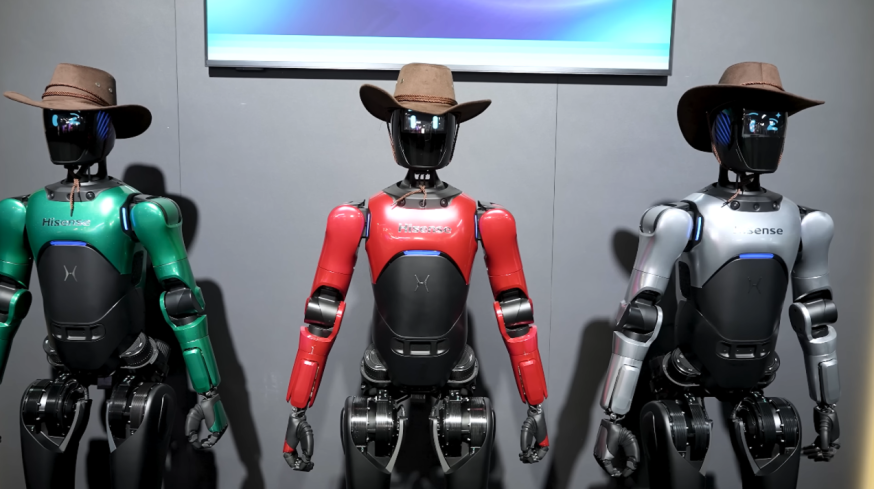
Humanoid robots at CES 2026: impressive on the show floor, but at home, the real test begins in terms of safety, reliability, and service.
Why are we seeing humanoids re-emerge now? Because a few puzzle pieces are falling into place better:
- Computer vision and planning have become more useful in real-time applications (recognizing, localizing, route planning).
- Sensor packages (depth, RGB, IMU, tactile) are better and cheaper, and are being fused more intelligently.
- Actuators and drive systems are more compact and powerful; "hands" are becoming less like toys and more like tools.
- And perhaps most importantly: demos feel less like theater and more like a (slow) first version of a product.
That said, we are still far from there. Anyone seeing humanoids at CES also immediately sees the bottlenecks that WinmagPro readers can see through:
Speed and precision
In a household, "slow but steady" is sometimes fine – but not if the system constantly has to regrasp, look again, or fails too often with simple variations.
Safety
A robotic arm with strength can be valuable, but it must be fault-tolerant near people and pets. Safety is not one feature, but a whole chain of sensors, limits, and fail-safes.
Reliability and error handling (including service and TCO)
A robot that does the laundry "almost" correctly once is a nice demo; a robot that does it every day without you standing next to it is a product.
Once something moves mechanically, the reality of wear, parts, updates, warranty, and maintenance comes into play. Humanoids only become interesting at scale when service, maintenance, and update policies are as mature as the technology. And it is precisely that service and TCO that determine whether "robot in the house" ever becomes more than a showcase.
This same reality check also determines the market: anyone wanting to understand why 'robots' are becoming a more serious theme for investors should read further: Why you can no longer ignore investing in robots.
Privacy and security
Back to the product reality at home: besides service and maintenance, privacy and security are an underestimated bottleneck. A humanoid is essentially a moving sensor platform with cameras and microphones in the most private space. It then becomes relevant whether processing on-device is possible, which data goes to the cloud, how long logs/images are retained, and especially how long and how quickly the update and patch policy is arranged. Without that foundation, these kinds of systems remain more demo technology than a mature product category.
You can see that tension particularly well in household tasks like laundry. Not because it is impossible, but because it is a perfect stress test: soft materials, variation in shapes, entanglement, and much interaction with existing devices. The Verge explicitly framed this during CES 2026 as a litmus test: how much is left when you view "doing laundry" not as a PR scene, but as a real workflow?
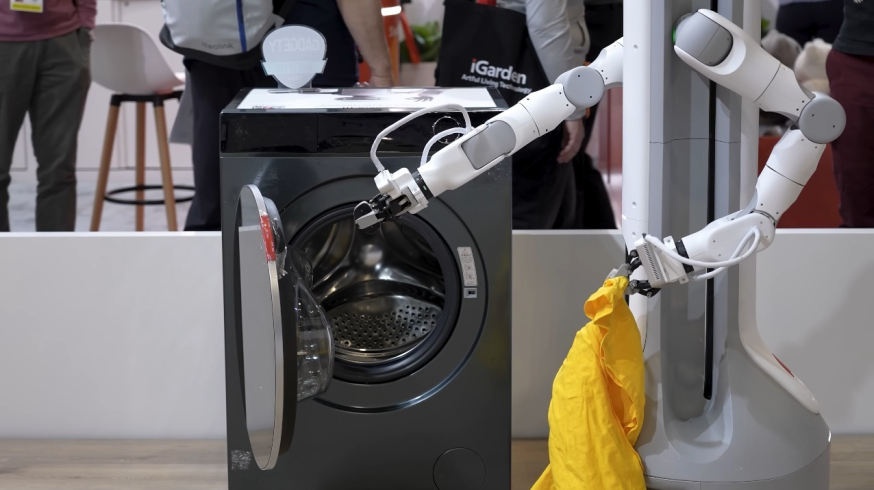
Laundry is a stress test for humanoids: soft materials, variation, and error handling make it really challenging.
Case 1: SwitchBot Onero H1 – impressive, but price & model not yet 'hard'
SwitchBot presented its humanoid household robot onero H1 at CES 2026 as part of a broader "Smart Home 2.0" positioning. On paper, this fits into the CES image of 2026: not one smart gadget, but a set of devices that perceive and act together.
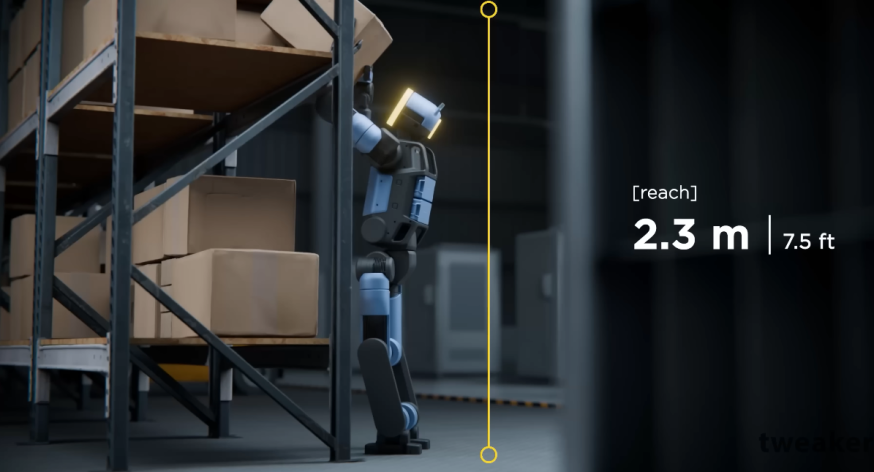
Specifications such as range and working area determine whether a humanoid goes beyond demos.
What is concrete about onero H1: SwitchBot describes the robot as a humanoid household robot with arms and hands, with a sensor package that combines tactile feedback with depth and image sensors (including RealSense). The goal is to understand and manipulate objects: "grasp, push, open, and organize", writes Tweakers. SwitchBot also mentions that there is a vision-language-action model built in, which allows the robot to perform tasks based on prompts (the step from "command" to "action plan").
But that is precisely where the WinmagPro reality check begins: a robot can technically "do more than one task", but that is different from reliably performing multiple tasks in an average home. Moreover: SwitchBot did not share any hard prices or availability in the announcement. There are estimates and target prices circulating, but none of that has been confirmed by SwitchBot – leaving the entire business case speculative for now. That is not unusual for a CES debut, but it does mean that you should read the use case primarily as direction, not as purchase advice.
Interesting in the margin: SwitchBot also showcased an AI clip (MindClip) at CES that requires a monthly subscription for many cloud functions. That does not automatically mean that the humanoid will also come with a subscription, but it does show which direction the revenue model for AI features often shifts: hardware plus ongoing services. And that is not a detail in humanoid robots, but a core question: what is the total cost, who maintains it, and how long will it remain safe and up-to-date?
Case 2: LG CLOiD – humanoid as part of 'AI Home' ecosystem
LG plays the same game, but from a different angle. While SwitchBot feels logical as a "smart home accessory ecosystem that expands into physical robotics", LG explicitly positions the humanoid as part of a broader AI Home vision: the "Zero Labor Home" concept, in which technology is supposed to reduce the burden of daily chores.
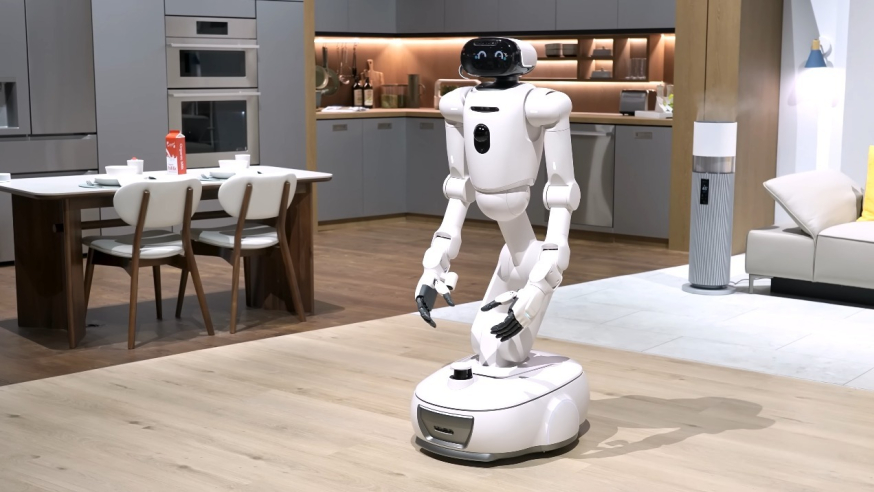
LG links humanoid robotics to an 'AI Home' ecosystem instead of one standalone gadget.
In LG's own description, CLOiD is a home assistant that should be able to perform a wide range of indoor tasks. The company emphasizes not only AI but especially mechanics: two arms with multiple degrees of freedom and hands with individually controlled fingers for fine motor tasks. LG also emphasizes interaction and navigation (display, speaker, camera, sensors) and on the layer above: "Affectionate Intelligence", intended to communicate more naturally and respond better over time.
The contrast with SwitchBot is relevant for a technical audience:
- Point solution vs platform: SwitchBot builds on an existing smart home infrastructure with consumer IoT.
- Ecosystem-first: LG links robotics to a home vision and – implicitly – to integration with existing appliances and its own smart home stack.
Which approach "wins" is not only about technology but also distribution, service, and trust. A robot that is allowed in your kitchen must not only be smart – it must also remain safe for years in an ecosystem that continuously receives updates.
Not every robot trend needs to be humanoid: precisely the 'smaller' robotics innovations show where practical gains can already be made today.
Side example: Roborock Saros Rover – not humanoid, but concrete use-case driven
Not all robotics at CES 2026 tries to solve the household as a whole. Roborock drew attention with Saros Rover, a concept in which a robot vacuum cleaner gets "legs" (extendable legs) to climb stairs – and even clean along the way.
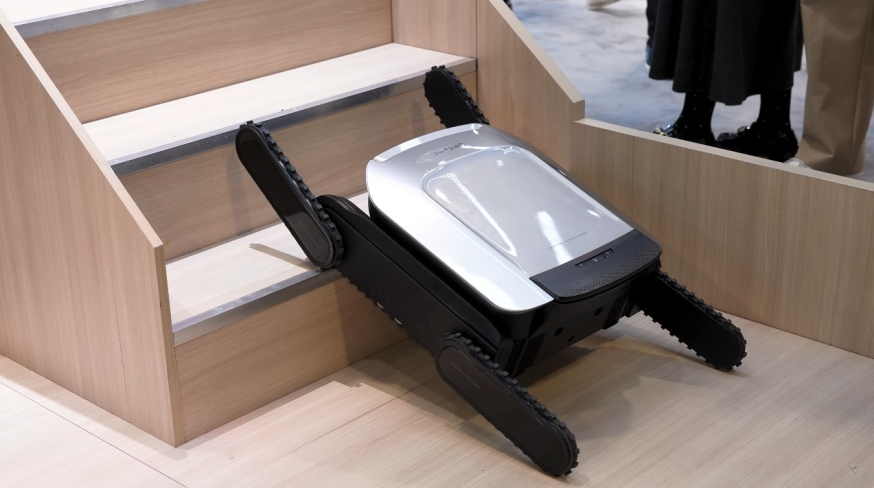
Not humanoid, but concrete: Saros Rover finally addresses the stair problem in multi-level homes.
Why this example is worth mentioning: it is the opposite of humanoid marketing. It tackles one very concrete problem that robot vacuum cleaners have not solved for years (multi-level homes and stairs), with a mechanical solution that you can directly evaluate on speed, stability, battery, and wear. That is why Saros Rover works as a reality check: sometimes "less humanoid" is technically more effective.
You can also see that same 'practical first' approach outside of robotics: in laptops, it’s not just about faster chips, but about form factors that adapt to how we work and play.
Rollable laptop screens: Lenovo Legion Pro Rollable as proof-of-concept with clear bottlenecks
If the robot trend illustrates the "embodied AI" line, then Lenovo's Legion Pro Rollable Concept symbolizes the second trend: hardware that adapts to the context. Lenovo explicitly positions it as proof-of-concept.
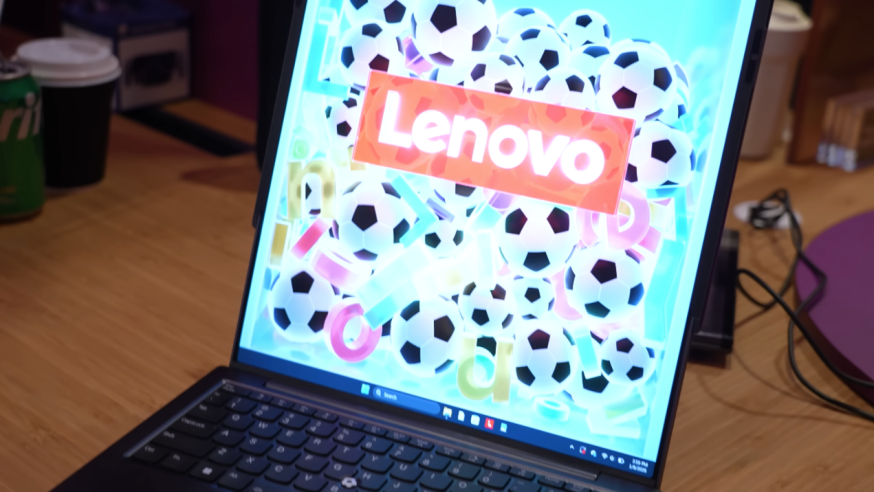
Rollable as proof-of-concept: a 16-inch base that can (vertically) roll out to a larger workspace for gaming and productivity.
The core: a 16-inch gaming laptop with an OLED screen that rolls out horizontally from 16 inches to 21.5 inches and ultimately 24 inches ultra-wide. Lenovo links that to esports and mobile training: compact in the bag, wider image on location.
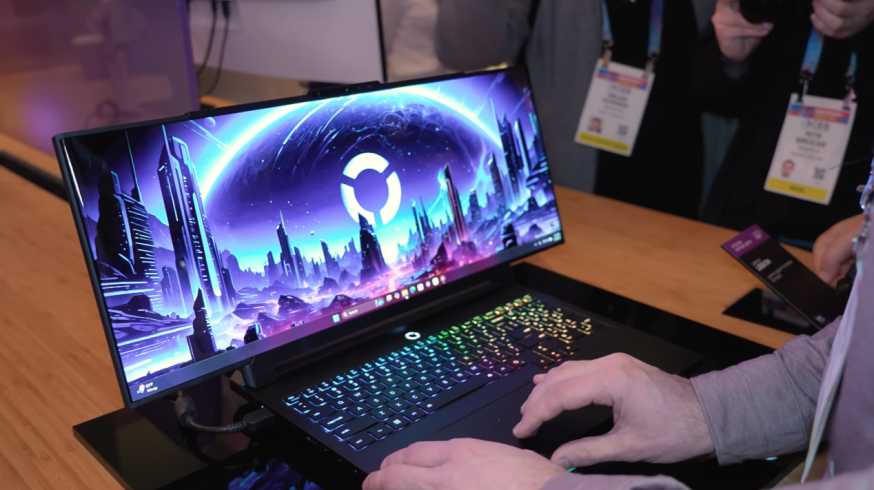
Ultra-wide as a form factor shows where the focus lies: more workspace in a portable setup – but UX, software, durability, and service remain decisive.
Technically, it’s a strong idea, but the success of rollable form factors rarely depends solely on the screen mechanism. The real bottlenecks lie in the chain around it:
OS/UX and scaling
A screen that dynamically grows larger requires window management that "scales" without apps scaling weirdly or layouts breaking. It’s a software problem that can slow down hardware innovation, especially when the concept goes outside a controlled demo scenario.
Hardware: transition, curvature, and durability
A rollable display has physical limits: edges, tension, and a transition where image and viewing angle must remain consistent. That can be solved on paper, but is brutally visible in daily use.
Durability and serviceability
Tens of thousands of roll cycles are nice in a lab test, but in product terms, it’s about something else: what happens after three years, how do you repair this, what does the warranty look like? Those are the questions that determine whether rollable laptops remain a niche or become a category.
Televisions: brighter and thinner – and 8K is not gone, but less central
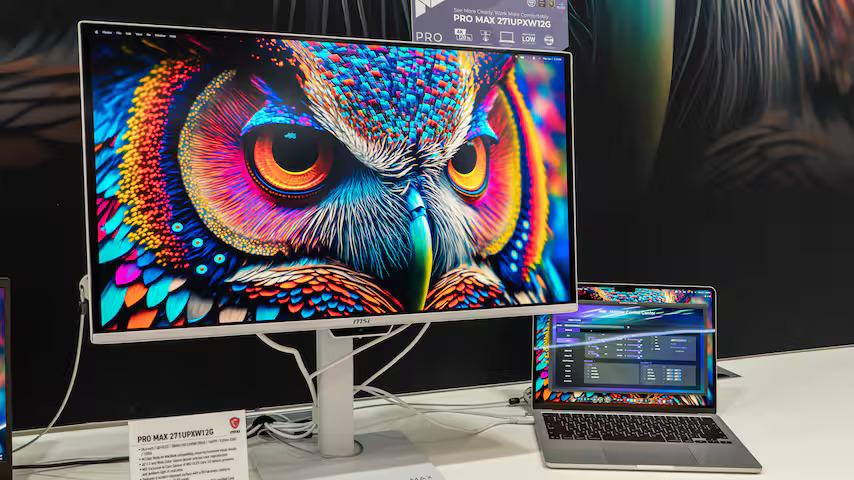
The TV corner of CES 2026 shows a third movement: manufacturers are primarily investing in improvements that consumers can see directly – brightness, color, reflection reduction, design – and less in "even more pixels".
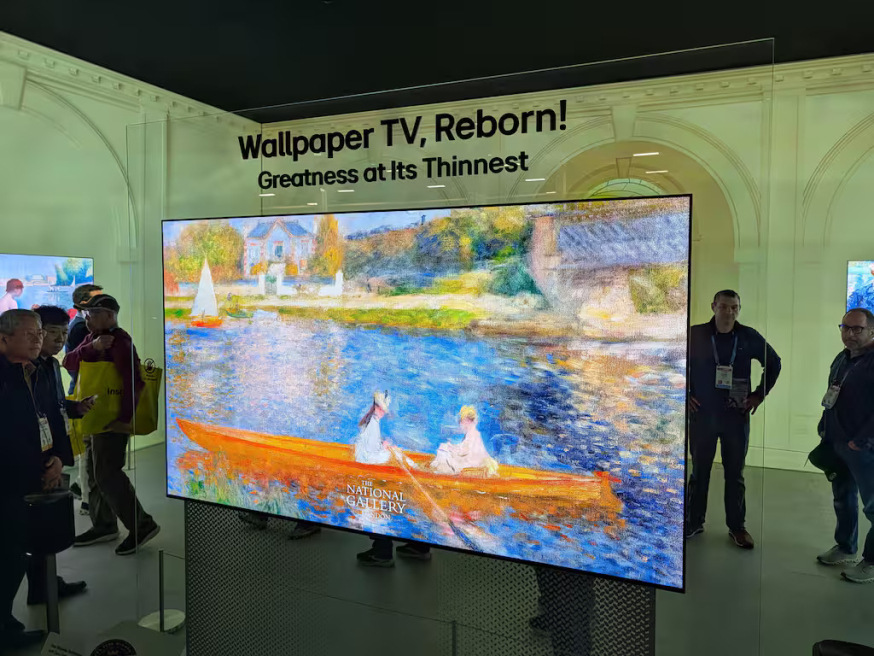
TV manufacturers are primarily focusing on design and visible quality in 2026 – not on "even more pixels".
LG made a big impression with the return of its Wallpaper line: the OLED evo W6, an ultra-thin TV (around 9 mm) that should be able to sit flush against the wall and focuses on a "True Wireless" story with an external box. It’s a classic CES signal: premium design as a technology product, with panel innovation as the underlying layer.
Samsung's story is similar in effect, but different in focus. FlatpanelsHD summarizes it sharply: Samsung presents the highlights of the 2026 lineup with more emphasis on Micro RGB/RGB LED LCD, OLED, and lifestyle (The Frame) and less focus on 8K. That is not the same as "8K is dead". FlatpanelsHD notes, for example, that there is likely still a flagship 8K model in the lineup (QN990H), but the subject clearly no longer plays the headline role of previous years.
The market logic behind this is clear: 8K has, despite technical advantages, a tricky value proposition as long as native content is scarce and 4K upscaling already feels "good enough". Manufacturers would rather invest in improvements that every viewer can see immediately: higher peak brightness, fewer reflections, better uniformity, and smarter processing.
Conclusion: what does this mean for 2026 (buyable vs concept)?
CES 2026 feels like the year in which consumer tech becomes more physical – but also the year in which the conditions will matter more than the demo.
- Robots are increasingly convincingly showing that "embodied AI" can work, but adoption revolves around reliability, safety, and especially TCO: who maintains it, how safe does it remain, what is the service path?
- Rollable displays prove that form factor innovation is still very much alive, but software, repairability, and warranty determine whether it comes out of prototypes.
- TVs show that pragmatism wins: brightness and design over "more K's", with 8K not disappearing but landing in the margins.
The common thread is simple: technology can do more and more – but only when practice (service, safety, software, and costs) moves along, does CES hype become a product category.
More CES updates and backgrounds can be found in CES 2026.