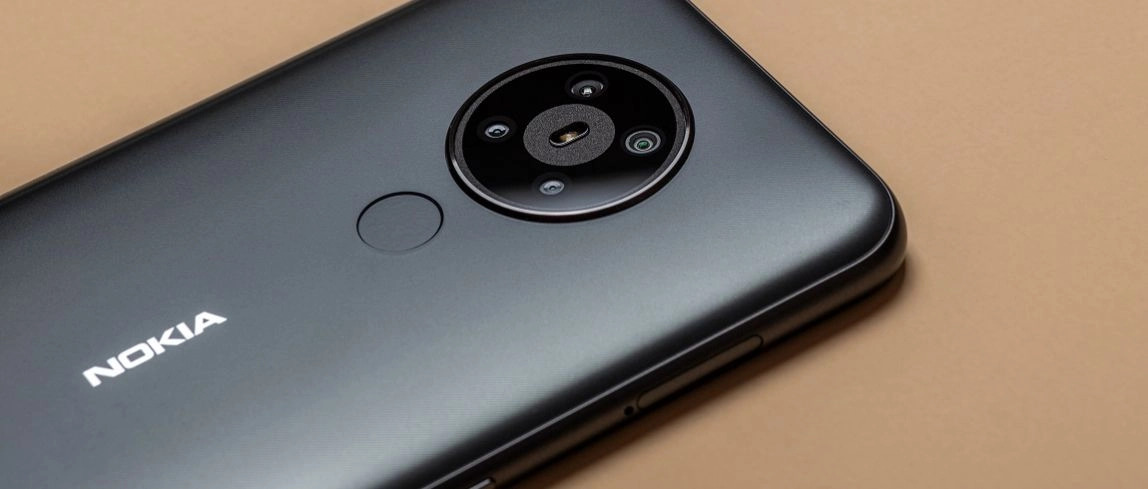

Let's go back in time
To provide a good answer to this question, we first dive into history. What was it like again?
The very first mobile phone was the size of a brick and therefore not very comfortable to hold. It was an expensive device from manufacturer Motorola that also spent endless time on the charger. If you watch a movie released around 1983, chances are you'll see one pass by.
A device that most of us can still remember well is the Nokia 3310. This mobile phone was very popular around the turn of the century due to its compact size and built-in games.
A device that most of us can still remember well is the Nokia 3310. This mobile phone was very popular around the turn of the century due to its compact size and built-in games. And there was the BlackBerry: primarily aimed at businesses, with email and calendar as the decisive features. The first BlackBerry (the 850) appeared in 1999 – not a smartphone as we know it now, but the beginning of "always being reachable" work.
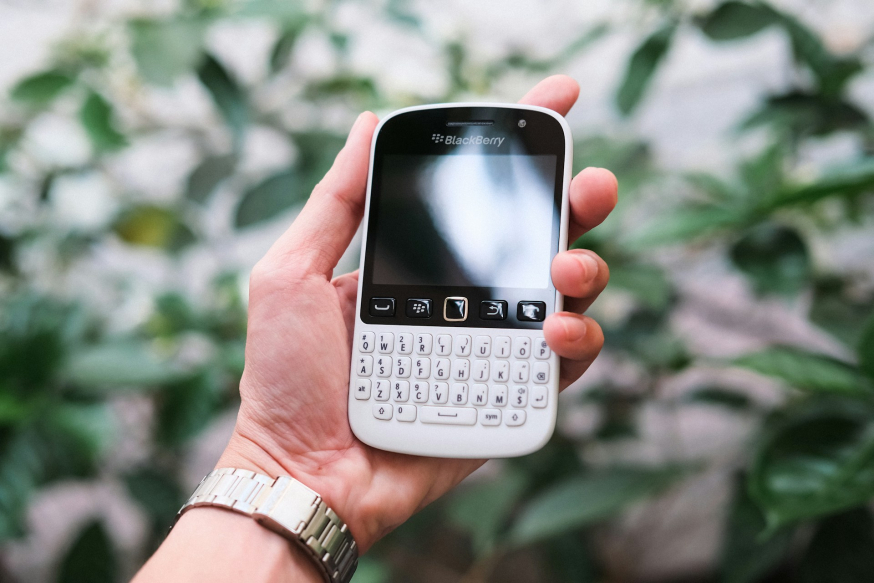
The BlackBerry made email and calendar mobile and became a business killer feature, long before the app economy.
In 2007, the first generation iPhone hit the market and changed the market forever. Touch became the norm, apps became the ecosystem, and "phone" suddenly became a complete platform. Microsoft already had mobile ambitions (Windows Mobile on PDAs), but it wasn't until the early 2010s that there was a real restart for consumers: Windows Phone (later followed by Windows 10 Mobile). In February 2011, Nokia and Microsoft announced their partnership; in October 2011, the first Lumias on Windows Phone (Lumia 800/710) followed.
The key moments in a row, so you can easily place the rest of the story:
- 1999: BlackBerry appears (business: email/calendar as killer feature)
- 2007: iPhone puts touch + ecosystem on the map
- 2010: Windows Phone appears as Microsoft's "restart" in mobile
- February 2011: Nokia and Microsoft announce their strategic partnership
- October 2011: Nokia presents the first Lumias on Windows Phone (Lumia 800/710)
- 2017: Microsoft indicates that new features/hardware are no longer a focus
- December 10, 2019: Windows 10 Mobile end-of-support
- October 21, 2024: Surface Duo 2 support ends
- February 2025: Store/apps on Windows 10 Mobile work increasingly less (according to reports from users/tech sites)
With that timeline in mind, it also becomes clear why it's often about one word with Windows Phone: ecosystem.
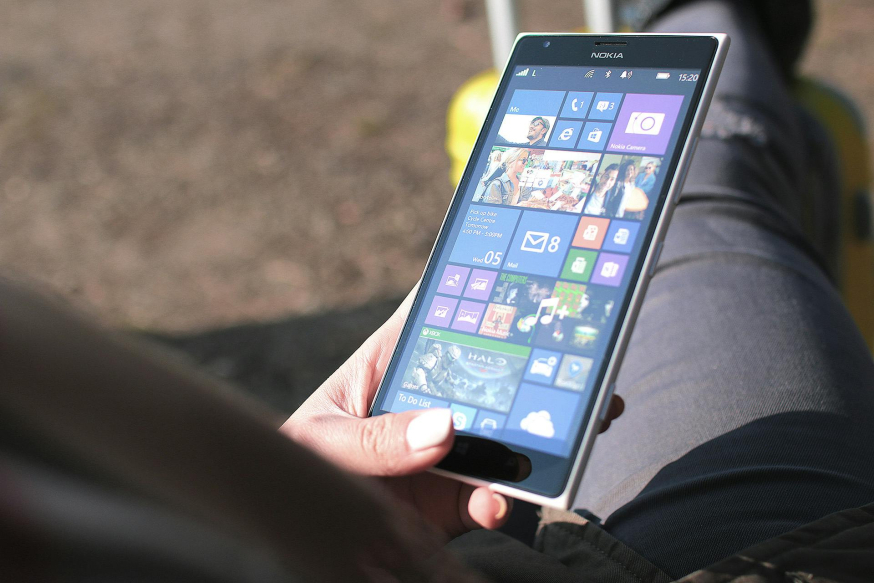
A Nokia device with Windows Phone tile interface showed a recognizable design, but lacked enough app ecosystem to break through permanently.
Operating systems: why Windows Phone struggled to gain momentum
We now know that the launch of the Windows smartphone took a long time. There were many plans and intentions that had to be adjusted and postponed repeatedly. And that has essentially remained the case. A form of indecisiveness, it seems, that has caused Apple's (iOS) and Android operating systems to be much easier to use and also developed much better and faster.
That sounds like a management summary, but you mainly saw it on the streets: iOS and Android surged ahead in pace, models, and especially apps. Windows Phone had its own identity (that tile interface was appreciated by many users), but the platform continued to struggle with the app gap. And therein lies the pitfall: without apps, users drop off – and without users, developers drop off.
Introduced, but quickly falling behind
The first iPhone had a touchscreen that was immediately embraced by users. The BlackBerry keyboard suddenly seemed outdated, even though there are still users today who can't do without it. BlackBerry remained relevant as a brand for a while, but eventually shifted towards Android. A symbolic turning point was the BlackBerry Priv: the first BlackBerry device that ran on Android by default (2015).
iOS and Android are now the most well-known and widely used operating systems, and app developers have massively joined in.
iOS and Android offered increasingly well-functioning apps – and that is decisive for most people. More and more models came onto the market. If you were comparing devices, sim only or mobile subscriptions, you rarely ended up with a Windows Smartphone. You also heard less and less about it. Microsoft was always lagging behind in the smartphone world, no matter how interesting the idea on paper sometimes was.
Why Windows Phone ultimately didn't make it:
- App gap: without apps, no users; without users, no apps
- Momentum: iOS/Android were in a momentum that Microsoft couldn't catch up with
- Hardware choice: fewer models in fewer price ranges = less reach
- Developer focus: everyone builds where the mass is
- Microsoft strategy: services on iOS/Android became more important than having its own OS
That sounds harsh, but that's how platform markets work: without apps, users drop off, and without users, developers drop off. Ultimately, Microsoft also explicitly chose to build its services on iOS and Android instead of having its own mobile OS.
2017–2019: from "no longer a focus" to the official endpoint
In 2017, Windows CEO Joe Belfiore indicated that new features and new hardware for Windows 10 Mobile were no longer the focus. Microsoft preferred to continue building its services on iOS and Android. This was particularly clear at the time through Belfiore's reactions on X/Twitter (and the reporting about it), not through a major press moment.
The definitive closure came on December 10, 2019: Windows 10 Mobile reached end-of-support. From that moment on, there were no more security updates and official support.
On paper, you could still use the platform for a while, but in practice, it means: without updates and without a living ecosystem, it becomes a declining matter.
2026: the Microsoft Store no longer works well for many Windows 10 Mobile users
And that "declining" became painfully visible as early as 2025. In February 2025, multiple sources reported that the Microsoft Store on Windows 10 Mobile no longer functions well. In other words: even if you still have a device that starts up fine, installing or updating apps suddenly becomes a problem.
From the Windows smartphone to the Microsoft Surface Duo (Android)
Microsoft's strategy has changed. Instead of Windows on your phone, a striking alternative emerged later – at the beginning of 2021 – the Surface Duo, a device with two screens running on Android. This shifted the focus to hardware on Android, with access to the app ecosystem that most users rely on. It seems that Microsoft ultimately also recognized that app choice is the decisive factor for many users.
This device was positioned as an alternative to phones with a foldable screen, but in practice, it mainly works as a dual-screen: two separate screens next to each other. Between the screens is a bezel, which interrupts the flow of the image rather than allowing it to flow smoothly. However, this is not necessarily a problem for this concept: it feels more like "two screens in your hand" than one large flexible panel.
The launch of this line was mixed: the idea was distinctive, but there was also criticism regarding price, cameras, and teething problems. Later, a second version (Surface Duo 2) was released, featuring better cameras and 5G. However, this chapter has now also been closed.
Surface Duo: interesting attempt, but also ended
Microsoft's own support pages now list both Surface Duo and Surface Duo 2 as "end-of-servicing": no newer Android versions and no more security updates.
For the Duo 2, it is also widely mentioned that all support ended on October 21, 2024.
What does this mean for Windows Phones now?
In short: Windows smartphones are not "sleeping" but truly gone. Microsoft has been focusing on its apps and services on iOS and Android for years, rather than on its own mobile OS. And if you still have a Windows phone lying in a drawer – or even still use it – it's good to realize that it's not just about "no updates". Components around it are also falling away: the Store that no longer works, apps that can no longer be installed, and services that are slowly stopping support.
Do you still have a Windows phone? This is wise
If you still use one (or have one lying around)? Then it's good to keep this in mind:
- Do not rely on security updates or a reliable ecosystem any longer
- Preferably do not use it for banking, 2FA, or password apps
- Transfer photos/contacts/calendar to a modern device (iOS/Android) as long as synchronization still works.
- See the device as legacy: fine as nostalgia/backup, but not as a "safe daily device".
- Business: phase out instead of "just rolling on", especially because apps and Store functionality may disappear.
For sensitive matters such as banking, two-factor authentication, or password apps, you want to be able to rely on current security updates and a functioning app ecosystem. That is exactly what Windows 10 Mobile can no longer provide since end-of-support, especially now that the Store is faltering in 2026.